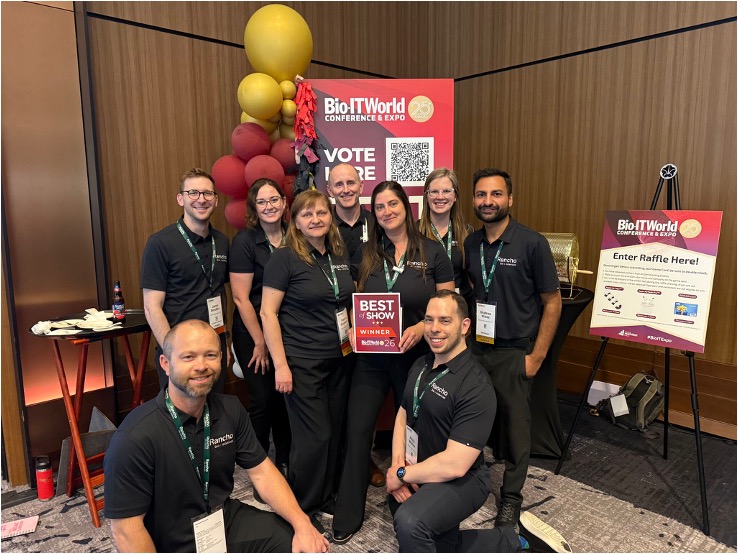
I spent three days at BioIT World in Boston a few weeks ago. As I spoke with data scientists, computational biologists, and research leaders, a common theme emerged.
Most organizations don't struggle to find data. They struggle to find the right data.
The conversations varied, but the underlying challenge was remarkably consistent.
One founder was building an AI assistant for biomedical research and wanted standardized
RNA-seq datasets to seed the system. Although public data was readily available, attempting to
create a foundation of datasets that an AI system could reliably reason over required significant effort.
Differences in metadata, annotations, and processing pipelines introduced noise, reduced retrieval accuracy, and increased the risk of misleading conclusions and hallucinations.
An immunology scientist from a large pharmaceutical company described a different use case. Their team generates bulk RNA-seq, single-cell, and spatial data internally to support clinical programs. When internal data isn't available or they want to validate their data, they turn to public datasets to answer targeted biological questions. Are the genes we're targeting expressed in the cell types we care about? Are they co-expressed? Do public findings align with what we're seeing in our own studies? Finding relevant datasets was only the first step. Determining whether the data was comparable and trustworthy took much longer.
None of these challenges are unique. Data scientists and bioinformaticians expect to spend time evaluating and preparing data. That's part of the job. The frustration comes when researchers spend weeks locating, validating, and standardizing datasets before they can begin answering the scientific questions that matter.
This is the problem we're trying to solve with OmicsHQ.
By bringing curated single-cell datasets into a unified catalog, standardizing metadata, harmonizing cell type annotations, mapping ontologies, and providing tools to explore datasets before download, we help researchers spend less time preparing data and more time generating insights.
That message seemed to resonate throughout the conference. We were honored to receive the Bio-IT World Best of Show award, recognition voted on by conference attendees and peers across the industry. I suspect the reason it resonated is simple: this is a problem many of us experience firsthand. Whether you're in biotech, pharma, or academia, the challenge isn't a lack of data. It's the time and effort required to identify data you can actually trust and use.
One scientist told me, "If I had access to this, it would be my first stop when looking for data."
That comment stuck with me because it captures what many teams are looking for, a trusted starting point for discovering, evaluating, and accessing public single-cell data.
What We're Building Next
The conversations at BioIT shaped our roadmap. Here's what's coming.
Multi-omics expansion - The most common request was for the same curation and standardization approach applied to other data types. We're planning to expand beyond single-cell transcriptomics to multi-omics data.
More data sources - Labs want access to more datasets in the catalog. We're continuously adding new sources and expanding our coverage.
Enhanced visualization - Researchers want to explore data quality and characteristics in more depth before downloading. We're building additional preview and exploration tools.
See It For Yourself
Want to see what OmicsHQ looks like with your use case?
We are running a special June promotion, Contact us for more details
.svg)

Comments